
13 August 2026 · 00:29:43
Our Lands Are Who We Are: Indigenous Science, Ecological Grief and Decolonising Research with Dr. Jessica Hernandez
Guest: Dr. Jessica Hernandez
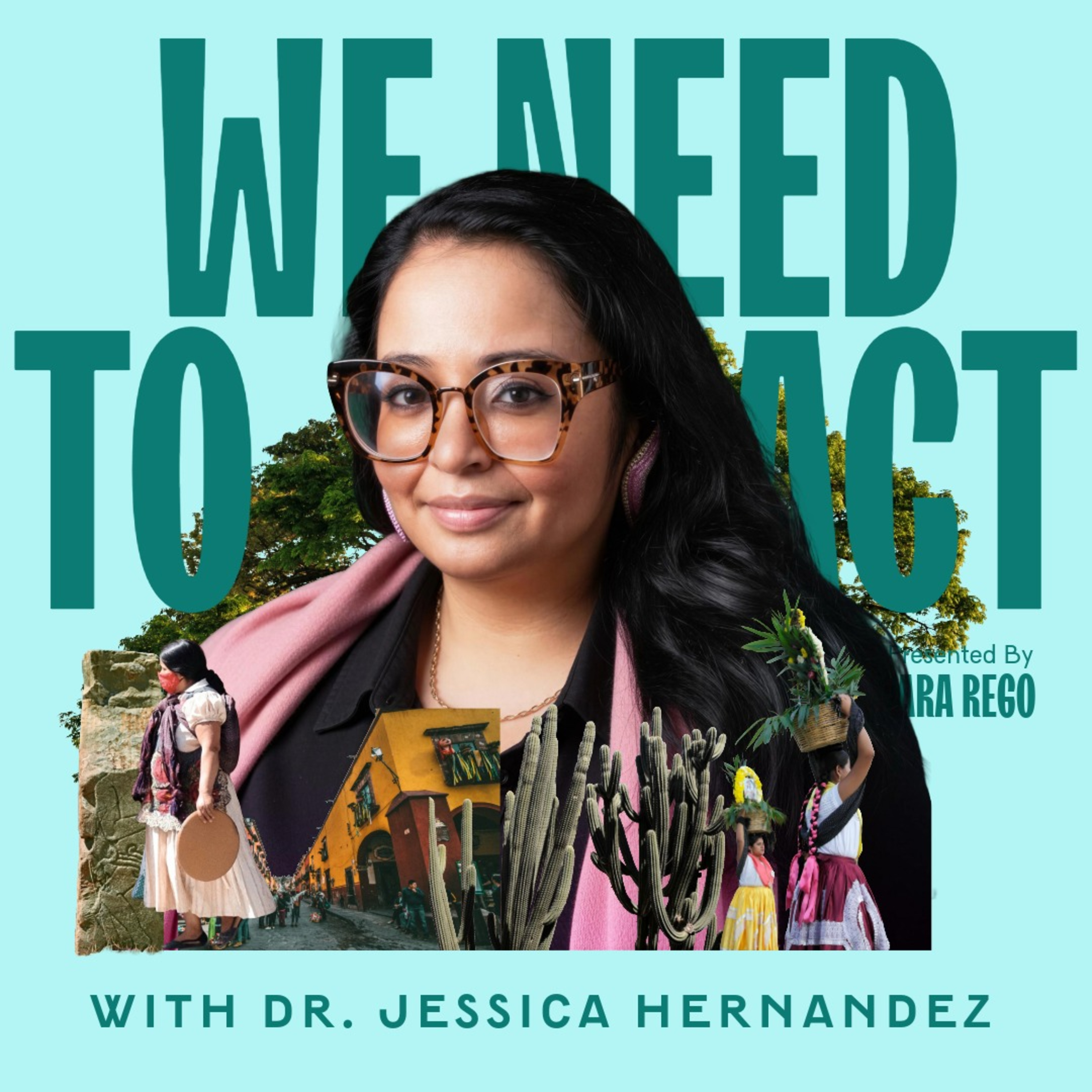
Episode 63 · 00:29:43
Our Lands Are Who We Are: Indigenous Science, Ecological Grief and Decolonising Research with Dr. Jessica Hernandez
Show notes
What happens to your sense of self when the lands that define you are taken away?
Dr. Jessica Hernandez is an Indigenous environmental scientist, author, and founder of Earth Daughters — an Indigenous-led collective supporting indigenous women and youth through mutual aid and climate justice initiatives. Of Binnizá and Ch'orti' Maya heritage, displaced from her ancestral homelands in Oaxaca and Central America, Jessica has spent her career doing what Western academia rarely allows: putting indigenous communities in charge of their own research.
In this conversation with Sara, Jessica speaks candidly about the dualities she navigates daily — as a displaced Indigenous woman, as a scientist trained in Western methods who refuses to extract knowledge from communities, as an advocate who must resist the individualistic mindset embedded in academia. She talks about ecological grief — the profound sadness that comes when lands are desecrated, even by well-intentioned renewable energy projects built without indigenous consent. She talks about the milpa — the communal agricultural system that embodies everything capitalism has erased. And she talks about Earth Daughters, which began as a mutual aid effort after an earthquake devastated Oaxaca in 2020 and has since grown into a nonprofit running projects from Bolivia to Guatemala to Colombia.
"Our lands are who we are, who we become, and what we hold."
In this episode:
- What displacement does to identity — and why the longing to return never leaves
- Why Western research is often extractive — and how to do it differently
- The hardest part of bridging indigenous knowledge and Western science in academia
- Ecological grief: what happens to your soul when the lands are taken
- How colonisation erased indigenous histories — and how education can help break the cycle
- The milpa: an indigenous agricultural system that embodies communal living
- Earth Daughters: from earthquake mutual aid to nonprofit projects across Latin America
- A call to action: pay attention to what is happening in the US — and advocate globally
About Dr. Jessica Hernandez:
Dr. Jessica Hernandez is an Indigenous environmental scientist of Binnizá and Ch'orti' Maya heritage, author of Fresh Banana Leaves and Growing Papaya Trees, and founder of Earth Daughters — an Indigenous-led nonprofit supporting indigenous communities through mutual aid, climate justice, and community-led research projects in Bolivia, Guatemala, and Colombia.
We Need to Act is a podcast about the people, ideas, and movements shaping a better now.
More episodes
Ep. 67
The True Cost of Fashion and Why We Need to Buy Less with Claudia Pievani
Fashion is broken. Can beauty fix it? In this episode of We Need to Act, Sara Rego speaks with Claudia Pievani, founder of Miomojo — an upper premium, cruelty-free Italian accessories brand and certified B Corp. Fashion is one of the most polluting industries on the planet. It exploits animals, unde

Ep. 66
The Ocean Won't Die But We Might: Indigenous Knowledge, Ocean Health & Youth Leadership with Bodhi Patil
The ocean is dying. Do we have the answers? In this episode of We Need to Act, Sara Rego speaks with Bodhi Patil, ocean guardian, founder of Inner Light and co-founder of Ocean Uprise. The ocean produces roughly half the oxygen we breathe and absorbs nearly a third of the CO2 we emit. And yet it rem
Ep. 65
Tuvalu Is Fighting to Survive: Climate Change, Rising Seas & Climate Justice | Dr. Tapugao Falefou
Tuvalu is living the climate crisis now. In this episode of We Need to Act, Sara Rego speaks with Dr. Tapugao Falefou, Tuvalu’s Permanent Representative to the United Nations and Ambassador to the United States and the Republic of Cuba. For Tuvalu, climate change is not a distant threat. Rising sea